Showing posts with label negotiations. Show all posts

18 February, 2020

Our trade talks with Europe and Britain are set to become climate talks

Climate change is set to become an inescapable part of negotiations now underway over an Australia-European Union free trade agreement, and also negotiations over the Australia-UK agreement necessitated by Britain’s exit from the European Union. 
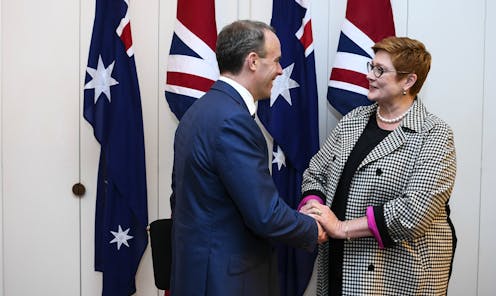
Image result for Our trade talks with Europe and Britain are set to become climate talk
Foreign Minister Marise Payne meets UK Foreign
Secretary Dominic Raab in Canberra on February 6.
Both agreements are needed to help shore up the world trading system which has been without an effective enforcement system following the decision of the Trump administration to withdraw support from the World Trade Organisation. 
In public, the major issue in the EU negotiations has been its determination to enforce so-called “geographical indications”, which limit the use of common names for products such as “champagne”, “feta” and “prosecco” to products made in those places, over and against our access to the wealthy EU market.

Read the story from The Conversation by Bruce Wilson and Chloe Ward - “Our trade talks with Europe and Britain are set to become climate talks.”

18 June, 2017

Trump’s climate snub: hold the outrage, we're just as bad

It's hard to put your finger on the most startling thing about Donald Trump's decision to give the one-finger salute to the Paris climate agreement, but one of its more incredible effects is that it finally knocks Australia off its perch as global climate pariah sans pareil. Which is quite extraordinary really, when you consider that the septuagenarian plutocrat currently passing for Leader of the Free World has only been officially meddling in global climate deals for 200-odd days, while we've been assiduously shirking our responsibilities and thwarting international negotiations for nigh on two decades.


If you can tear your gaze away, for a moment, from our woebegone chief scientist Alan Finkel – the singularly unfortunate fellow tasked with advising the Coalition on how to curb emissions without actually resorting to effective policies to do so – then think back to the heady days of Australia's first foray into disingenuous climate change negotiations: the Kyoto climate conference of 1997, where the Aussie delegation was 'stacked' with representatives of the fossil fuel industry and our negotiating tactics comprehensivelycheesed off the European Union. Was it because we wanted a free ride? Or was it that, after almost derailing the consensus in order to secure a special deal, we decided to stick it to the rest of the industrialised world by not ratifying the Kyoto Protocol after all? Hard to say.


Read Sarah Gill’s comment in today’s Melbourne Age - “Trump’s climate snub: hold the outrage, we're just as bad.”

02 June, 2017

Donald Trump's call to 'put America first' by exiting Paris climate accord to backfire

That Donald Trump's decision to withdraw the US from the Paris climate agreement was widely anticipated does little to moderate its impact on efforts to avoid dangerous global warming and America's standing in the world.
 Director of Melbourne University's Climate
 & Energy College, 
Malte Meinshausen, introduces
 a speaker at a recent lecture.
The US will exit from its voluntary obligations - now set at a reduction of 26-28 per cent of 2005 emission levels - but begin negotiations to re-enter but at terms that are "fair" for America, Trump said.

The Paris accord was "less about climate and more about other countries getting a financial advantage over the US", he said, amounting to "a massive redistribution of United States' wealth to other nations”.

Malte Meinshausen, director of Melbourne University's Climate & Energy College and a former climate negotiator, dismissed Trump's suggestion the Paris agreement could be "renegotiated'. That way could "paralyse international negotiations for years".  


Read Peter Hannam’s piece in today’s Melbourne Age - “Donald Trump's call to 'put America first' by exiting Paris climate accord to backfire.”

14 December, 2015

Experts reflect on Paris climate negotiations outcome


After two weeks of negotiations in Paris, the world’s nations have reached a global deal to tackle climate change.

The agreement commits 196 countries to help limit global warming to “well below 2℃ above pre-industrial levels and to pursue efforts to limit the temperature increase to 1.5℃”.

 Under the agreement:

Countries will pursue their self-determined emissions targets from 2020 onwards.

The national targets will be reviewed and strengthened every five years.

 Global emissions should peak “as soon as possible”.

 By the second half of this century, greenhouse gas emissions should be balanced out by sinks, processes that remove them from the air.

 Developed nations will contribute at least US$100 billion a year from 2020 to help poorer nations deal with climate change.

 Experts react to the agreement in this piece from The Conversation - “Historic Paris climate pact reached – experts react.”

12 December, 2015

U.N. officials declare the final climate change pact available


LE BOURGET, France — After almost two weeks of marathon negotiations, the lines for food and coffee on Friday night snaked through the temporary tent city here that has been home to the global climate talks. People made final bets in a five-euro pool on the precise hour the talks might conclude.

Others, needing to recharge for the final stretch of negotiations, jockeyed for spots on couches in the lounges.

The goal here is a daunting one: to get 195 countries plus the European Union to agree, for the first time, on a deal that would start reducing the risks of climate change by cutting their use of fossil fuels that create dangerous greenhouse gas emissions.

Read the New York Times story - “Draft of Climate Pact Is Ready, U.N. Officials Say.”

08 October, 2015

U.N. gives a clue on likely Paris agreement


W

ith less than two months before the world’s leaders convene in Paris for the United Nations Framework Convention on Climate Change, the U.N. has released a new preliminary draft of what an international climate agreement — the purpose of the two-week convention — might look like.

While the new draft is sparse on specific details, it does include a commitment by the world’s governments to hold global warming at 2°C compared to pre-industrial levels, the threshold that scientists generally agree is required to stave off irreversible consequences of climate change. The new draft also stipulates that nations should readdress their limits on greenhouse gas emissions every five years, a requirement that environmentalists championed at negotiations in Bonn in early September.