01 August, 2020

Telling stories about renewables in agriculture

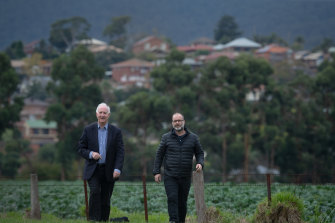
Karin Stark (pictured with her daughter) has seen the power of stories in action and will bring her story to Shepparton’s Beneath the Wisteria on Wednesday, August 12.


She will talk, in a virtual sense, about renewables in agriculture and tell the story about how and why she and her partner installed Australia’s biggest solar/diesel hybrid pumping system on their Narromine farm.


Ms Stark has, for some 17 years, engaged with communities throughout central-west New SouthWales around contemporary environmental issues.


She staged Australia’s first

National Renewables in Agriculture conference last year and for that initiative was a finalist in the 2019 NSW-ACT Agrifuture’s Rural Women’s Award.


The second of those conferences was to be held this year, but because of Covid-19 it has been postponed and a tentative date of May 19 has been set for 2021.


Having worked with the NSW State Government and Landcare, Ms Stark saw firsthand the hunger among farmers for dependable information about environmental and sustainability matters.


Subsequently, she settled on the idea of the National Renewables in Agriculture conference where people could both hear and share stories. That first conference attracted 250 people and the next, planned for Dubbo, will be, she hopes even bigger.


Ms Stark admits to not physically doing a lot on her farm as beyond being a mum, she is a director of Farm Renewables Consulting and works part-time with ReAqua, the company which installed the 500kW solar/diesel hybrid pumping system on her farm.


Those keen to join this story-telling session Beneath the Wisteria can connect to the Zoom meeting at: https://bit.ly/3k4u2RE. Those planning to join the discussions should connect a few minutes early and time will be allowed for Q&A.


Questions about the August 12 meeting should be directed to the convenor, Robert McLean, as 0400 502 199 or vial email at r.mclean7@icloud.com.


29 June, 2020

Tim Hollo speaks at Beneath the Wisteria

Tim Hollo, the executive director of The Green Institute joined us Beneath the 

Wisteria on Saturday, June 27.


The discussion was recorded and can be viewed here.


Our next guest on Wednesday, July 22, at 10:00 am will be Professor Andrew Balkers from Australian National University.


Professor Blakers is E2 Professor of Engineering at the Australian National University.


He has held several personal Fellowships (Humboldt, ARC Queen Elizabeth II, ARC Senior Research and Radio Research Board). He is a Fellow of the Australian Academy of Technological Sciences and Engineering, the Australian Institute of Physics and the Australian Institute of Energy, and is a Life Member of the International Solar Energy Society and the Australian Conservation Foundation.


Details of the Zoom event will be related soon.

18 June, 2020

Two webinars look at Victorian 2019 climate findings

DELWP is running two webinars to give an overview of the information from Victoria’s Climate Science Report 2019 and the local-scale Victorian Climate Projections 2019, as well as guidance on understanding and using the information. Both webinars allow plenty of time for Q&A with DELWP and CSIRO scientists.

Webinar 1: Climate change in Victoria – past, present and future

Date: 1-2pm, Wednesday 24 June 2020

Join via this link on the day: MS Teams Live Event


Webinar 2: Victorian Climate Projections 2019 – findings and tips for interpreting

Date: 1-2pm, Friday 26 June 2020

Join via this link on the day: MS Teams Live Event

14 June, 2020

Greens executive director, Tim Hollo, to join those who gather Beneath the Wisteria

Tim Hollo (pictured) will join those who gather Beneath the Wisteria in Shepparton for their Saturday, June 27, event.


The executive director of The Greens Institute will visit the city via Zoom conversation. 


Based in Canberra, Tim is a respected environmentalist and musician and has worked for the Greens, Greenpeace, 350.org and was the Communications Director for former Senator and Greens leader, Christine Milne.


He was also on the board of Greenpeace Australia Pacific.


Tim is an accomplished musician and has performed at the Woodford Folk Festival and among other places, New York’s Carnegie Hall.


He is also the founder and Executive Director of Green Music Australia and as a writer, he has had his work published in the Guardian, on the  ABC, the Griffith Review and Crikey.


The Green Institute, according to its website, is an Australian non-profit organisation, established formally in October 2008.


Its mission is to “support green politics through education, action, research and debate“. 


“Green politics means broad community-wide change grounded in the principles of ecology, social justice, democracy, non-violence, sustainability and respect for diversity,” the website adds.


Tim will bring his knowledge and experience of the climate crisis to discussions Beneath the Wisteria on Saturday, June 27, at 11:00 am.


Those with any questions can contact the convenor, Robert McLean, on 0400 502 199 or


via email and those keen to join us should follow this link: https://us02web.zoom.us/j/81060815318.


16 May, 2020

Anika Molesworth to 'Zoom' into Beneath the Wisteria on May 30

(Beneath the Wisteria supporter, Mik Aidt from Geelong's "The Sustainable Hour", has kindly tidied up the recording from the May 30 visit by Anika Molesworth showing only Anika's presentation, it's in two pieces, Part One and Part Two - thanks Mik)

A far western New South Wales farmer with an acute understanding of the climate crisis and how it impacts on those who work the land will be a guest at Shepparton’s Beneath the Wisteria on Saturday, May 30.

Far western New South Wales farmer, Anika Molesworth,
will "Zoom" into Beneath the Wisteria on Saturday, May 30.
Anika Molesworth will join the group at its monthly gathering via Zoom in an event starting at 11:00 am.

Anika splits her life between her family’s arid outback sheep station, her PhD crop trials in central NSW, and the lush and green rice paddies in Southeast Asia, where she works as a researcher in international agricultural development. 

She was awarded the 2015 Young Farmer of the Year, 2017 NSW Finalist for Young Australian of the Year, and most recently the NSW Young Achiever Award for Environment and Sustainability. 

Anika is a passionate advocate for sustainable farming, environmental conservation and climate change action. She helped form Farmers for Climate Action and connects land managers to researchers through her platform Climate Wise Agriculture in order to build resilience into farming communities.
She is also keenly interested in the conservation of natural and cultural heritage in farming communities and manages the International National Trusts Organisation’s Sustainable Farms program.

Anika has lived on and worked her family farm since she was 12 and was to be married on the property this year, but her plans for that moment were frustrated and postponed because of the Covid-19 dilemma.

A powerful array of speakers were assembled for February’s Nation Climate Emergency Summit in Melbourne and Anika was among them.

Anika has been interviewed by the Shepparton-based podcast “Climate Conversations”. 

The Zoom, Beneath the Wisteria is free and will last for about an hour with Anika explaining a little about herself, how the climate crisis is impacting on farmers and what they can do to live with these never seen before changes to the climate. There will be time for questions.

The May 30 Zoom meeting featuring Anika can be accessed at: https://us02web.zoom.us/j/82326064674, the convenor, Robert McLean, can be phoned at 0400 502 199 or contacted via email at r.mclean7@icloud.com.
07 May, 2020

Change is afoot

Change is afoot.


The emphasis given to national and international news on Beneath the Wisteria is about to change.

Several generous people have helped me buy a rather special podcasting device, a Rodecaster Pro.
Podcasting has just a few elements that are critically important and among the most important is the quality of the audio; audio that can be perfect using the Rodecaster Pro.

The challenge is, however, that learning a whole new skillset at 72 can be rather stressful and so the several hours a day spent on trawling through national and international news sites for climate crisis news will now be devoted to learning more about audio and podcasting.

To date, I have produced more than 200 episodes of “Climate Conversations” of varying quality, from tragic to not so bad, but it’s my aim to lift the overall standard as in the final analysis, the podcast lives  or dies on the quality of the actual content and the audio itself.

Beneath the Wisteria will, from here, be more about what actually happens at our monthly gatherings, what is happening in the wider Goulburn Valley and within Shepparton itself.

Comment is welcome - contact Robert McLean on 0400 502 199.

Also, check-out “Climate Conversations”.


06 May, 2020

Covid-19 climate lessons

The novel coronavirus pandemic of 2020 has striking parallels with climate disruption. 

The threat was well known and catastrophic, even existential. History’s valuable lessons were ignored. Researchers were clear on what needed to be done, and how to respond. The UN had devoted a whole section to the issue, governments ran risk scenarios and national security analysts warned of the consequences. The developed world had the capacity to be ready. And to support less prosperous nations, or should have been.

When it became fatal, it was conceived by wealthy nations as a threat somewhere else, because they were insulated. Then there was the denial, the delay, wanting to avoid any economic dislocation. Modern society was good at research, solutions would appear, no need to panic. Humans had tamed nature.

Read the story from Climate Code Red by David Spratt and Alia Armsitead - “Covid-19 climate lessons.”

Garnaut: Australia will lose competitive advantage if no clean energy transition

A strong future Australian economy can be created by embracing a low emissions economy, and risks sacrificing much of its economic advantages if its doesn’t, according to one of Australia’s leading economists.
Garnaut: Australia will lose competitive advantage if no clean ...
Ross Garnaut - we need to accelerate our transition to renewable energy.
Addressing the Stimulus Summit co-hosted by the Smart Energy Council and RenewEconomy, leading economist Professor Ross Garnaut said that there is an increasing appreciation of the benefits of acting on climate change, and the opportunities that exist in accelerating the transition to a clean energy economy.
Expressing optimism about the opportunities that exist in a transition to zero net emissions, Garnaut said that the transition provides a way for Australia to invest in future industries, while also supporting the economy to recover after the impacts of Covid-19.
Read the story from RenewEconomy by Michael Mazengarb - “Garnaut: Australia will lose competitive advantage if no clean energy transition.”

Climate change: Lack of action enough to make a mother weep

The climate crisis is back in the news, well, at least in the letters section of The Melbourne Age.


Writing about Mothers Day, one writer said:

“My girl will be 35 in 2050 and by scientific projections that future looks grim: frequent extreme weather events, such as our recent firestorms; soaring temperatures; extended droughts; ecosystem collapse; mass extinction; migration wars; fresh water and food shortages, unbreathable air and, well, it's enough to make a mother weep.”

Another asked: “Why can't we move from laggard to leader on climate change?”

Another questioned the idea of using fossil fuels to create hydrogen saying: “Invest in new hydrogen energy projects including those powered by fossil fuels is dumbfounding.”

Read the letters from The Age - “Climate change: Lack of action enough to make a mother weep.”

Planners say pandemic shows farmland on city fringes is crucial

If housing keeps concreting over land previously used for farming, they say reliance on imported food will become the norm.
Farmland on Melbourne's city fringe has been central to how well Melbourne is coping during the coronavirus pandemic, academics Michael Buxton (L) and Andrew Butt say.
Farmland on Melbourne's city fringe has been central to
how well Melbourne is coping during the coronavirus
pandemic, academics Michael Buxton (L) and Andrew Butt say.
“Urban sprawl and rural subdivision could halve Melbourne’s peri-urban food production capacity,” said Andrew Butt, from meeting 41 per cent of the city’s current food needs now to just 18 per cent by 2050.
Professor Butt and Michael Buxton, two RMIT planning academics, have this month released a new book, The Future of the Fringe, published by the CSIRO. In it, they show that a quarter of Australia’s agricultural production now comes from land on city fringes.
“In this pandemic, both food production and supply chains have proved increasingly vulnerable,” Professor Buxton said. “Dependency on international and interstate food assumes that stable conditions will continue, but long and complex supply chains can be disastrous in a crisis."
Read the story from The Age by Clay Lucas - “Planners say pandemic shows farmland on city fringes is crucial.”

New EPA powers delayed by a year in coronavirus 'omnibus' bill

Strong new powers promised to the environment watchdog have been delayed by more than a year, sparking fears cowboy companies will persist with unsafe management of toxic waste.
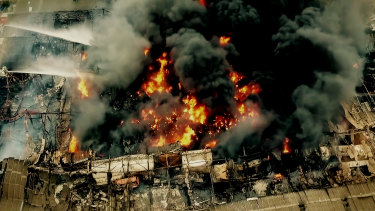
Firefighters on platforms battle the West Footscray factory fire of August 30, 2018.
The new laws to beef up the Environment Protection Authority’s power to crackdown on environmental offenders and tough penalties for polluters were due to come into effect in July this year.
Read the story from The Age by Benjamin Preiss - “New EPA powers delayed by a year in coronavirus 'omnibus' bill.”

Logging likely had significant effect on summer fires: scientists

Logging native forests increases the severity and risk of bushfires and likely had a significant effect on Australia's unprecedented summer fires.
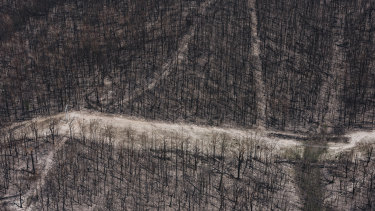
Burnt bushland on the NSW South Coast, which was heavily hit by bushfires.
New research from five scientists published in Nature Ecology & Evolution on Wednesday finds that public debates about the links between climate change and bushfires are warranted and should prompt action, but the contribution of logging to bushfires also needs greater scrutiny.
And, unlike much of the action needed to halt global warming, land management is within the control of Australians, write the scientists from the Australian National University, Macquarie University and the University of Queensland in their review of evidence.
Read the story from The Age by Miki Perkins - “Logging likely had significant effect on summer fires: scientists.”

05 May, 2020

Billions Could Live in Extreme Heat Zones Within Decades, Study Finds

As the climate continues to warm over the next half-century, up to one-third of the world’s population is likely to live in areas that are considered unsuitably hot for humans, scientists said Monday.
Currently fewer than 25 million people live in the world’s hottest areas, which are mostly in the Sahara region in Africa with mean annual temperatures above about 84 degrees Fahrenheit, or 29 Celsius. But the researchers said that by 2070 such extreme heat could encompass a much larger part of Africa, as well as parts of India, the Middle East, South America, Southeast Asia and Australia.
With the global population projected to rise to about 10 billion by 2070, that means as many as 3.5 billion people could inhabit those areas. Some of them could migrate to cooler areas, but that would bring economic and societal disruption with it.
The parts of the world that could become unsuitably hot “are precisely the areas that are growing the fastest,” said Timothy A. Kohler, an archaeologist at the University of Washington and an author of the study, which was published in Proceedings of the National Academy of Sciences.
Read the story from The New York Times by Henry Fountain - “Billions Could Live in Extreme Heat Zones Within Decades, Study Finds.”

Massive Pilbara wind and solar export hub gets environmental green light


Plans for a massive renewable energy generation and export hub based in the Pilbara region of Western Australia have firmed up this week, after being recommended for approval by the state’s Environmental Protection Authority.
Massive Pilbara wind and solar export hub gets environmental green ...
Plans for Pilbara massive renewable energy generation and export hub.
Environmental approval for the 9GW Asian Renewable Energy Hub was recommended on Monday, subject to conditions including consultation on management plans with traditional landowners and managing and monitoring impacts on migratory birds.
The project is one of a handful of truly massive proposed renewable energy investments, along with the 10GW solar plant and huge battery storage project initially backed by billionaires Mike Cannon-Brookes and Andrew Forrest in the Northern Territory. 
There is another 5GW renewable energy project proposed for W.A., and numerous other plans also emerging as developers look to the possibility of renewable hydrogen, either to support the export of green fuels, or even “green metals” – value-added manufacturing underpinned by cheap, green power.
Read the RenewEconomy story by Sophie Vorrath - “Massive Pilbara wind and solar export hub gets environmental green light.”

Australian businesses call for climate crisis and virus economic recovery to be tackled together

A leading Australian business group is calling for the two biggest economic challenges in memory – recovery from the Covid-19 pandemic and cutting greenhouse gas emissions – to be addressed together, saying it would boost growth and put the country on a firm long-term footing.
Emissions from a coal fired power station in the Latrobe Valley
Chief executive of industry group representing more than 60,000
businesses says ‘Covid-19 and climate are bigger than any economic
 challenge we’ve faced in the last century’.
Innes Willox, chief executive of the Australian Industry Group, representing more than 60,000 businesses, says economic recovery from the virus and the transition required to meet net-zero emissions by 2050 are overlapping issues that should be taken on together.
“There’s a lot that we can do to rebuild stronger and cleaner,” Willox planned to say on Tuesday, according to a speech released in advance.
“The need is urgent. Covid-19 and climate are bigger than any economic challenge we’ve faced in the last century.”

Westpac abandons funding for thermal coal mining

Westpac says it will stop funding mining projects for coal to be used for power generation by 2030, as part of a broader commitment to reach a net-zero emissions business model by 2050.
It will also ensure that the emissions produced by the energy production projects it does finance are dramatically reduced by 2030.
In a statement, Westpac said it recognised that climate change was one of the most significant issues facing the “global economy and our way of life” and said it believed economic growth and emissions reductions were complementary goals.
According to Tim Buckley, a coal analyst with the Institute for Energy Economics and Financial Analysis, which supports a shift to a decarbonised economy, Westpac is the 30th major international financial institution this year to declare it was abandoning coal.
Read the story from The Age by Nick O’Malley - “Westpac abandons funding for thermal coal mining.”

Investors urge governments to go green for coronavirus recovery

Major investors, Australian superannuation funds and the International Energy Agency are urging governments to seize the green opportunity to drive economic growth after the coronavirus pandemic and avoid the risks they see in high carbon emitting projects.
Investors are urging governments to invest in renewable energy and low-emissions industries to drive economic growth after the coronavirus pandemic.
Investors are urging governments to invest in renewable
energy and low-emissions industries to drive economic
growth after the coronavirus pandemic.
"Recovery plans that exacerbate climate change would expose investors and national economies to escalating financial, health and social risks in the coming years," said a statement from the Investor Agenda group - an international coalition of institutional investors and asset managers whose members hold more than US$80 trillion under management.
Large-scale energy generators such as coal and gas fired power plants and their heavy duty transmission networks, as well as gas powered manufacturing facilities, are built to deliver a return on investment over decades.
Investors argue international commitments to tackle climate change and reduce emissions such as the Paris Agreement create an unacceptable risk for long-term investment in emissions intensive projects.
Read the story from The Age by Mike Foley - “Investors urge governments to go green for coronavirus recovery.”

‘Blown away': Safe climate niche closing fast, with billions at risk

As much as one-third of the world's population will be exposed to Sahara Desert-like heat within half a century if greenhouse gas emissions continue to rise at the pace of recent years.
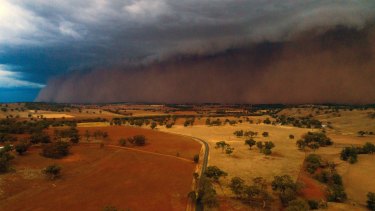
Dust storm near Orange, NSW in January. The relatively stable climate that has supported human civilisation for the past six millennia is likely to shift in the next 50 years because of climate change.
Dust storm near Orange, NSW in January. The relatively stable climate
that has supported human civilisation for the past six millennia
 is likely to shift in the next 50 years because of climate change.
Scientists from China, the US and Europe found that the narrow climate niche that has supported human society would shift more over the next 50 years than it had in the preceding 6000 years.
As many as 3.5 billion people will be exposed to "near-unliveable" temperatures averaging 29 degrees through the year by 2070. Less than 1 per cent of the Earth's surface now endures such heat.
That heat compares with the narrow 11- to 15-degree range that has supported civilisation over the past six millennia, according to research published Tuesday in the journal Proceedings of the National Academy of Sciences.
Read the story from The Age by Peter Hannam - “‘Blown away': Safe climate niche closing fast, with billions at risk.”

04 May, 2020

In A Post-Pandemic World, Renewable Energy Is The Only Way Forward

The Economist’s regular cartoonist, KAL, summed it up neatly in his cartoon last week: the battle humanity is waging against the coronavirus is only the preliminary round, and after that, we have a much bigger and stronger opponent waiting for us, called the climate emergency. That some people still may think that something as objectively and scientifically proven is still up for debate could be seen as one of the greatest achievements of the fossil fuel industry. It’s not. It’s the greatest threat to human life.
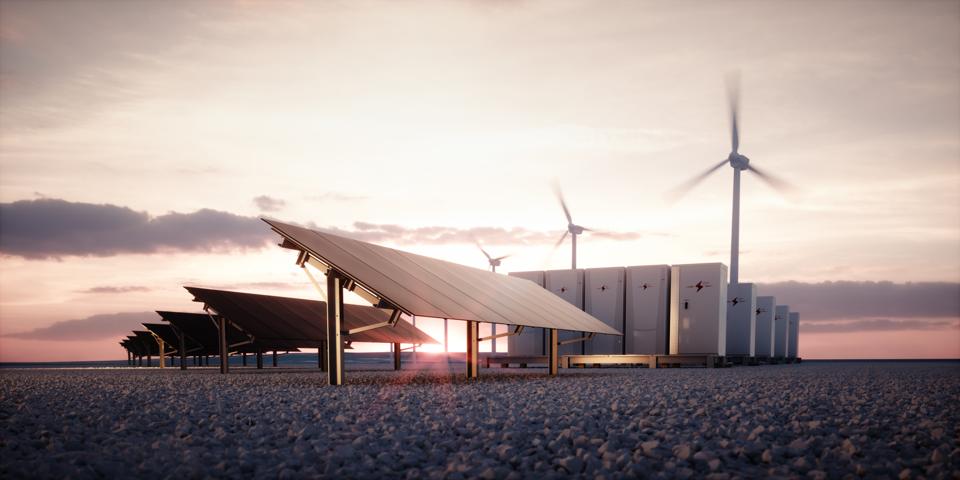
Dawn of new renewable energy technologies. Modern, aesthetic and efficient dark solar panel panels, a modular battery energy storage system and a wind turbine system in warm light. 3D rendering.

Pollution affects us all, very much so. In addition to being responsible for some seven million deaths annually, it makes us more vulnerable to all kinds of respiratory diseases, including, of course, those caused by viruses such as SARS-CoV-2, which could also become seasonal and repetitive. Not only do we know that we need to fix this problem: we also know that not doing so is killing us, and we now have a pressing example of this.
Read the story from Forbes by Enrique Dans - “In A Post-Pandemic World, Renewable Energy Is The Only Way Forward.”

03 May, 2020

Airlines and oil giants are on the brink. No government should offer them a lifeline

Do Not Resuscitate. This tag should be attached to the oil, airline and car industries. Governments should provide financial support to company workers while refashioning the economy to provide new jobs in different sectors. They should prop up only those sectors that will help secure the survival of humanity and the rest of the living world.
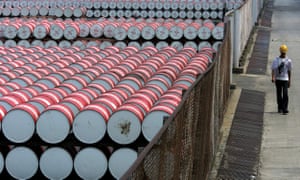
Oil drums
Governments have the oil industry over a barrel – hundreds of
millions of unsaleable barrels, to be more precise – just as
they had the banks over a barrel in 2008.’
They should either buy up the dirty industries and turn them towards clean technologies, or do what they often call for but never really want: let the market decide. In other words, allow these companies to fail.
This is our second great chance to do things differently. It could be our last. The first, in 2008, was spectacularly squandered. Vast amounts of public money were spent reassembling the filthy old economy, while ensuring that wealth remained in the hands of the rich. Today, many governments appear determined to repeat that catastrophic mistake.
Read the story from The Guardian by George Monbiot - “Airlines and oil giants are on the brink. No government should offer them a lifeline.”